How to set up a referral programme one decision at a time
Set up a referral programme in the right order: define a referral, set a reward ceiling, plan how word spreads, track it and check before launch.
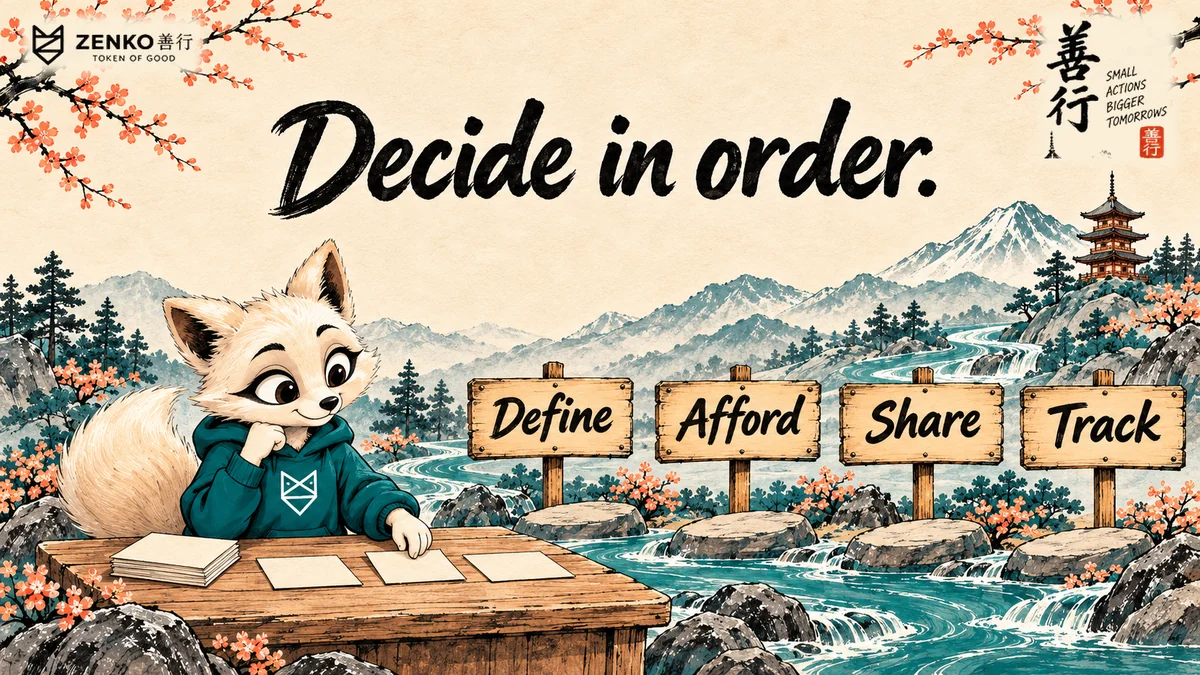
Imagine a friend rings and says: "I want to start paying customers to recommend me. Where do I begin?" A list of steps is not enough. The order of the decisions matters: what counts as a referral, what you can afford, how word reaches the friend, and how you will pay correctly. This guide takes them one at a time, with a worked example and a checklist at the end.
The numbers in the examples are invented to show the arithmetic. Replace them with your own.
Decide what counts as a referral
Before you pick a reward, write one sentence that says what a referral is. Without it, it is hard to tell whether to pay, and a claim you did not expect is harder to judge fairly.
Some definitions you might choose from:
- A new customer who has paid their first invoice.
- A new customer who has paid and has not asked for a refund within 30 days.
- A friend who books and attends a first appointment.
A sign-up on its own can be a weak trigger, because it may cost the friend little and tell you less about demand. A paid or completed first purchase is usually harder to fake and closer to what you actually want. No single definition is standard. Pick the one that matches the thing you would be happy to pay for, and write it where the referrer can see it.
Fill in the sentence: "A referral is a new customer who ______ and who ______, within ______ days."
Work out what you can afford to pay
Next, find the most you can pay and still make sense of the sale. One conservative way to do it is to start from the gross profit on a first sale, then set the total reward cost as a share of that profit, not of revenue.
This is a cautious budgeting lens, not the only valid one. A business with strong repeat purchase may reasonably pay more on the first sale, because the relationship is worth more than the first order. If you do that, decide it on purpose and write down the assumption.
Worked example (invented figures):
| Line | Amount |
|---|---|
| First job value | £1,200 |
| Gross profit (30% gross margin) | £360 |
| Reward to the referrer | £50 |
| Discount for the friend | £50 |
| Total reward cost | £100 |
| Reward cost as a share of first-job gross profit | about 28% |
That £100 is before any time you spend administering the scheme. If 28% feels too high, the lever is the size or shape of the reward, not the definition of a referral. If it feels comfortable, you now have a ceiling to work within. Our guide to what each reward type really costs puts cash, discounts, credit, gifts and donations side by side on one order.
Decide how people will tell their friends
There are several ways word can reach a friend:
| Route | What it looks like | Check before use |
|---|---|---|
| Personal conversation | A customer mentions you in person | Usually nothing for you to send |
| Code on a card or receipt | A code the customer can hand on | What you tell the customer to do with it |
| Shareable link | A link the customer can copy | Whether you encourage or script the message |
| Friend's details form | The customer types a friend's email or number | What you then send, and whether the friend agreed to hear from you |
| Invitation sent by you | You message the friend on the customer's behalf | Whether you hold consent for that message |
The "check before use" column matters because UK electronic marketing rules can reach further than the messages you send yourself. The Information Commissioner's Office guidance on electronic mail marketing says the rules apply if you send a marketing message or instigate someone else to send it. It gives asking people to forward your marketing message to their friends as an example of instigation. It also says that asking people for their friends' contact details does not remove your duty to make sure the messages you then send comply, and that this can be hard because you cannot be sure the friends agreed to give their details.
The same page says that when we read it on 7 November 2026 the guidance was under review following the Data (Use and Access) Act and might change. It is guidance, not legal advice, and we are not saying that any one route is safe or unsafe. Read the current page for yourself, and take advice on your particular scheme if you plan to send anything to a friend.
Track referrals so you can pay correctly
A minimal pilot log can help you pay correctly and avoid paying twice. Whether you need software is a separate decision. Record only what you need to run and pay the scheme. A starting set of columns:
| Column | Why you need it |
|---|---|
| Referral reference | A short ID for this referral |
| Referrer reference | A customer ID or reference rather than a name where you can |
| Friend reference | Leave blank until the friend becomes a customer, then use their customer or order reference |
| Date | When the referral was made |
| Qualifying event | The thing that triggers the reward under your definition |
| Reward status | Pending, due, paid, cancelled |
| Notes | Refunds, duplicates, anything unusual |
Agree rules in advance for the awkward cases: the same friend credited twice, a customer referring themselves, a refund after the reward is paid, and how long after the qualifying event you pay. Avoid collecting a friend's email or phone number by default; if you do need personal data about a friend, decide why you need it, who can see it and how long you will keep it, and check the legal position for your case rather than assuming it. You can download a referral ledger template with these columns. For controls against fake or farmed rewards, see how to prevent reward farming.
Pre-launch checklist
Tick these before you tell a single customer.
A pilot of ten customers tells you whether the process works. It does not tell you how well the scheme will perform at scale.
Where Zenko fits
If you want to reward a qualified action rather than a sign-up, our guide to rewards-based marketing explains how to choose the action. To ask about a campaign, contact Zenko. Availability and terms are confirmed for each campaign.
Related referral guides
- What each reward type really costs
- Why referral programmes fail and where to look first
- Referral marketing vs paid ads, compared like for like
Frequently asked questions
What is a qualified referral?
It is a referral that meets the condition you have written down, such as a new customer who has paid their first invoice and not asked for a refund within a set period. The condition is yours to choose. Write it before you set a reward.
How much should a referral reward be?
There is no standard amount. One cautious approach is to cap the total reward cost at a share of the gross profit on a first sale, then adjust if repeat purchase justifies more. Work out the figure from your own margins and note your assumptions.
Do UK marketing rules apply to refer-a-friend schemes?
They can. The ICO's electronic mail marketing guidance says the rules cover messages you send and messages you instigate someone else to send. Whether they apply to your scheme depends on how it works, so review the flow against the current guidance and take advice where you are unsure.
Sources
- Information Commissioner's Office, Electronic mail marketing, guidance read 7 November 2026 (marked under review following the Data (Use and Access) Act): https://ico.org.uk/for-organisations/direct-marketing-and-privacy-and-electronic-communications/guide-to-pecr/electronic-and-telephone-marketing/electronic-mail-marketing/
- Zenko, How to choose the right customer action to reward: https://www.zenkoprotocol.com/insights/choose-customer-action-to-reward/
- Zenko, How to prevent reward farming without punishing real customers: https://www.zenkoprotocol.com/insights/prevent-reward-farming/
This guide is general information, not legal, tax or financial advice. Worked examples use invented figures.